


Japan A·M·C Co., Ltd. (hereinafter, Japan A·M·C), which holds the largest market share in Japan for high-pressure piping fittings, established a Production Management Department dedicated to production planning.
By using Asprova APS (hereinafter, Asprova), they achieved automation of production planning and visualization of resources, successfully resolving the issue of delayed deliveries.
Next, aiming for further improvements, they undertook initiatives to enhance productivity. To reduce setup time that occurs each time the products being processed are switched, they considered decreasing the number of material and jig exchanges. However, using only the standard functions of Asprova did not yield the desired results. After consulting with their implementation vendor, AJS Co., Ltd. (hereinafter, AJS), Japan A·M·C explored the possibility of participating in a development and verification project for the Solver option (hereinafter, Solver), and joined the development to address their production challenges.
We spoke to the following people about the background to the introduction of Asprova and the Solver PoC (Proof of Concept/development and verification project), and the effects of the introduction.

1.Story of Solver PoC
2. Results After Implementing Solver
3.Future GOAL / Request & Advice
1.Story of Solver PoC
The following is an explanation from the person in charge about the background of the Solver PoC implemented as the next step after the introduction of Asprova.
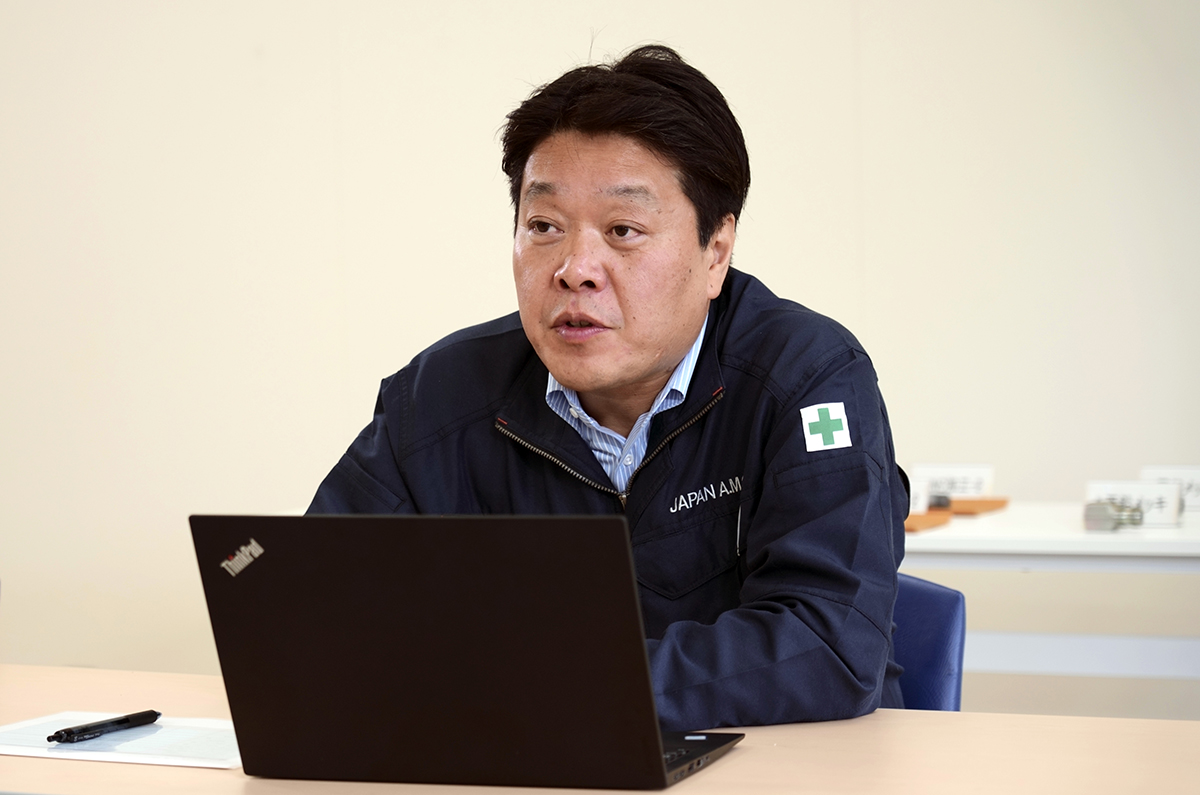
Manufacturing Management Division Mr. Arikawa
By using Asprova, we automated the creation of production plans and visualized resources, making operations far more efficient than before.
With the workflow of the Production Management Department established, we began considering the next step: whether productivity could be further improved from the perspective of production planning.
Our company operates a typical high-mix, low-volume production / production of small quantity of many products system, with around 10,000 product types. However, the quantity produced per production order averages only 20–30 units. As a result, each time we finish producing one product and move on to the next, we repeat setup operations for every product change. We focused on the time required for these setups.
Production lead time is broadly composed of:
1) setup time
2) processing time
3) other excluded time
While it is difficult for the Production Management Department to reduce 2) and 3), we believed that setup time could be shortened.
At our company, setup time mainly consists of two components: the time to switch tools for processing, and the time to exchange materials and jig’s. Reducing the exchange time could shorten production lead time and improve productivity.
Upon investigation, we found that the number of tools are extremely large, making it difficult to shorten tool-switching(changeover) time. Therefore, we set the reduction of material and jig exchange frequency as our main challenge.
However, we faced a dilemma: the number of material types alone ranges from 1,000 to 2,000, and jigs are exchanged 7 times per day per machine on average, and up to 10 times on some machines. Determining how to achieve this reduction was a significant challenge.

Initially, we tried to reduce the number of material and jig exchanges using Asprova’s standard functions, but it was difficult to achieve the production plan we envisioned.
When we consulted with our implementation vendor, AJS, we were told that it might be difficult with the standard functions, but the Solver option, which is being developed by Asprova, might provide a solution.
Through AJS, we were put in contact with Asprova to explore this option.
To obtain internal approval for my participation in the development of Solver, I set a numerical target of improving productivity by 1%.
The specific measures I planned to achieve this target are as follows:
-
While prioritizing compliance with customer delivery dates, I create production plans to produce products using the same materials consecutively. This minimizes the number of jig exchanges, shortens setup time, and improves equipment utilization.
-
Continuously using the same materials also reduces the time required for material retrieval in the warehouse and for external setup.
At the same time, I worked on reducing the time required to create production plans. For this, I set a numerical goal of cutting the time spent on manual sequence change operations by 10 hours per month.
By quantifying these targets and clarifying the cost-effectiveness, I was able to obtain internal approval promptly.
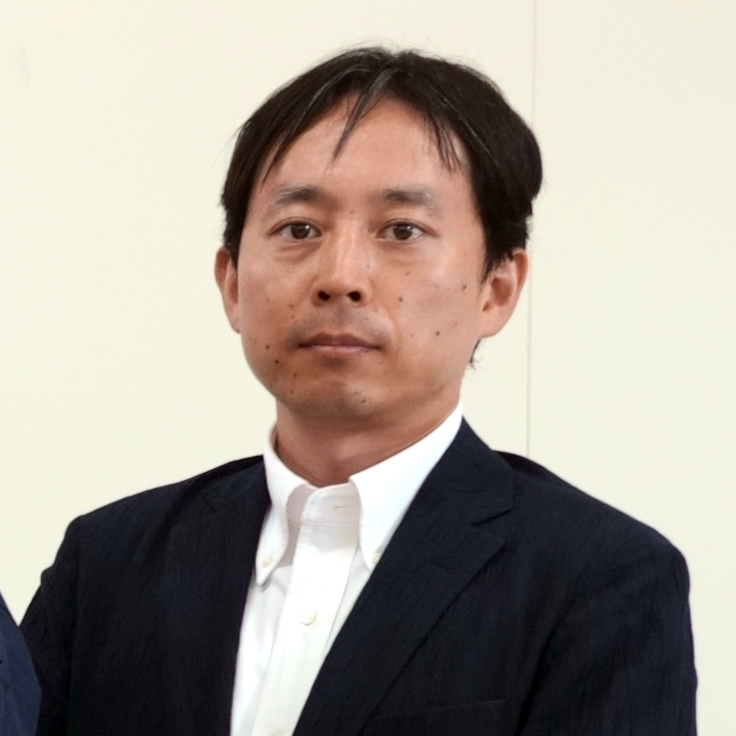
Asprova Development Engineer: Tatsuya.I
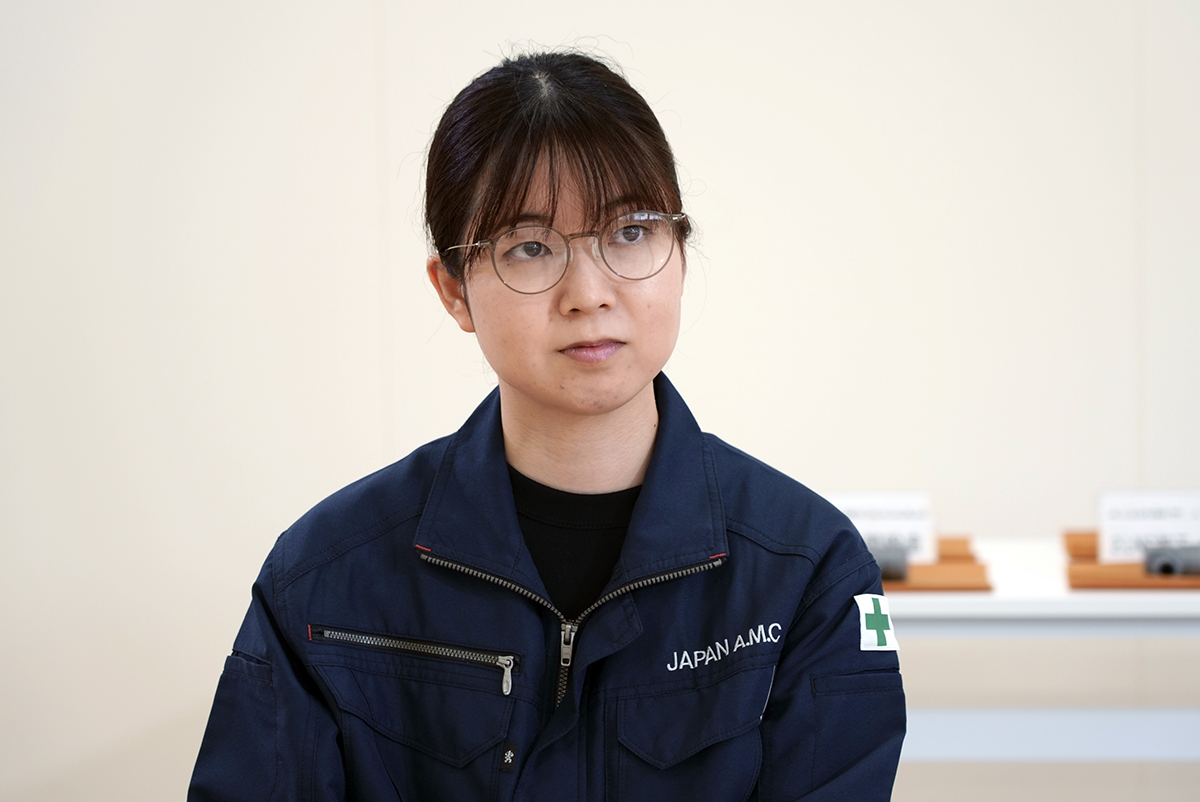
Production Management Department, Planning Section: Yumiko.T
After using Solver, creating production plans that minimize material and jig exchanges became much easier. Allocations that were previously difficult are now handled automatically, almost like a personalized solution. Daily planning time has been reduced from 2.5 hours to 2.0 hours, which has noticeably improved productivity.
When I first joined the Production Management Department a few months after Asprova was introduced, it was my first experience with a production scheduler. Initially, I would pass plans directly to manufacturing, sometimes overlooking short-lead-time products.
Over time, I tried to reduce material and jig exchanges, which was impossible using Asprova’s standard functions. Solver made it achievable. I feel that my trial-and-error experience with Asprova, combined with observing the production process, helped in effectively using Solver.
Being able to shorten planning time and reduce exchanges has greatly improved our efficiency. Looking ahead, I aim to reduce exchanging times and rethink overall operations, including further leveraging Asprova, to make the workflow even smoother.

???create a production plan using Solver???

Production Management Department, Planning Section: Haruka.I
Solver has a simple interface with no unnecessary buttons, so it’s really easy to use. In the past, I used to create a full month’s production plan once a week, but now I create production plans for the next three days every day, incorporating various requests as they come in.
Once the conditions are set, Solver handles all the calculations, which makes the work much easier.

3.Future GOAL / Request & Advice
— Looking ahead, what does the company aim to achieve?
At our company, we use a one-piece flow (cell) production system for high-mix, low-volume production. Workers decide task order and setups, so process conditions vary by cell. We aim to reflect these variations in the production scheduler to keep plans on track.
Currently, our plans don’t account for worker skill differences, which affect production times even on the same machine. In the future, we hope Solver can consider these skill levels.
For companies considering Solver, it works best when goals and requirements are clear—this clarity made its development smooth at our company.
— If you have any requests or expectations for Solver, please tell us.
My current production plans do not take differences in worker skill levels into account. Even on the same machine, production times vary depending on the worker’s skill. I hope that in the future, I will be able to generate production plans that consider these skill differences.
— If you have any advice for those considering introducing Solver, please share it with us.
I think Solver is most suitable for companies that have a clear understanding of what they want to achieve. At our company, clarifying our goals and requirements made the development of Solver proceed smoothly.
*Interview date: 30, May, 2023
*The department listed reflects the organization name at the time of the interview.
